
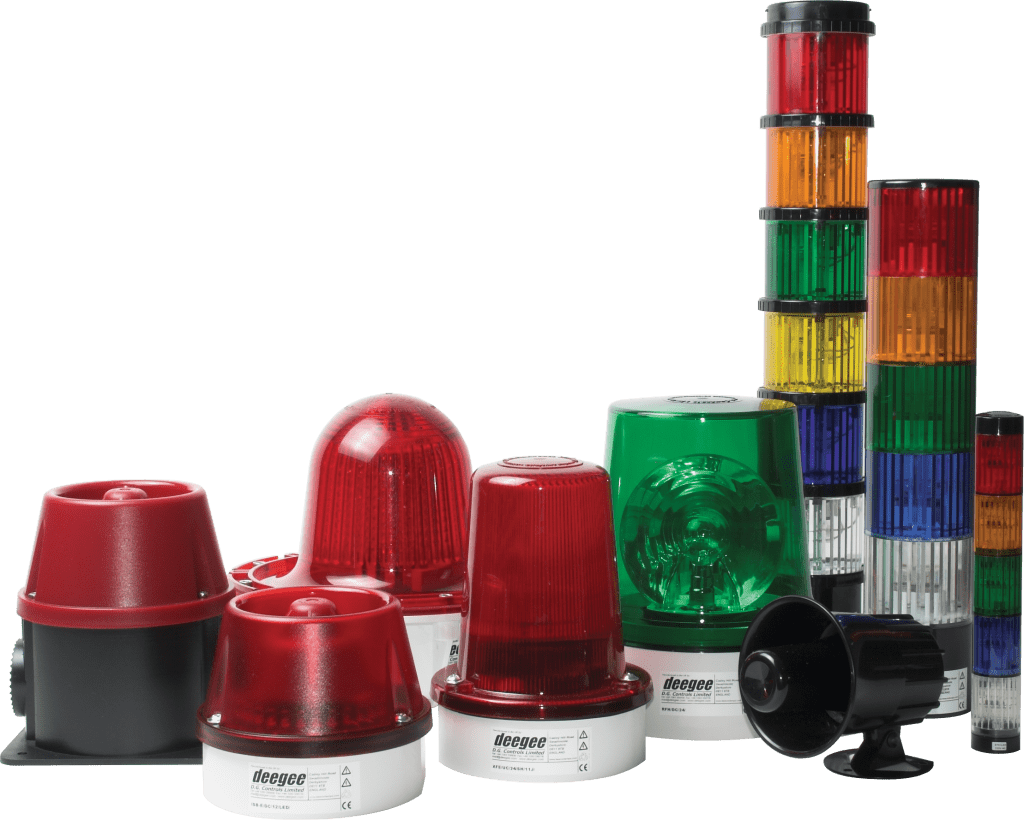
Before diving straight into installation, taking the time beforehand to plan the job is ideal for securing reliability, safety and efficient results. Just as important, it is crucial that installation should only be carried out by a qualified professional. With other factors to consider, such as application, orientation, maintenance, voltage drop and mounting, plays a role that the unit performs at peak efficiency.
* APPLICATION *
If your job needs a beacon, and you’re not sure on exactly what is required, please take the following into consideration:
🌟 BRIGHTNESS 🌟 – Is the beacon bright enough to be visible without being overpowering?
🎨 COLOUR 🎨 – Is a specific colour required to be certain standards?
🚨 IP RATING 🚨 – What level of environmental protection is required? Where will the beacon be used?
⚡ POWER CONSUMPTION ⚡ – Does the available power supply meet the beacons requirements?
🚦 MODE 🚦 – Should the beacon be static, or flash, or rotate?
🤔 DIFFERENTIATION 🤔 – Can it be distinguished from other nearby beacons, to ensure there is no confusion from the end-user of its meaning?
🦺 VISIBILITY 🦺 – Have viewing angles been considered, along with any potential obstructions for maximum visibility?
🚨 ORIENTATION AND MOUNTING 🚨
Typically, beacons that are continuously used are installed vertically, with a dome on top. It’s important that mounting is installed correctly, as improper mounting can affect the IP rating. For example, in the case of sounders, the horn must never point upwards.
A variety of L-shaped brackets and poles are available to help facilitate optimal orientation.
🚨 VOLTAGE DROP AND ELECTRICAL CONSIDERATION 🚨
To avoid affecting the beacons performance, before installation the potential voltage drop should be taken into consideration. For example, if a long cable runs, especially those containing high currents, it can reduce voltage at the beacon. To help reduce disruption, where possible keep the cable runs as short as possible, and calculate voltage drops by using Ohm’s Law to ensure sufficient power reaches the beacon.
🚨 MAINTENANCE 🚨
For optimal maintenance, ensure there is easy access for inspection and servicing to avoid any risks. To negate the need for persistent upkeep, choose a low-maintenance unit, such as LED beacons where possible. Other preventative maintenance can be achieved, such as replacing Xenon flash tubes before failure, this can prevent damage to the circuit and prolong the life of the unit.
Explore our full range: https://beaconlamps.com/products
📧 mail@beaconlamps.com ☎️ 01283 550850